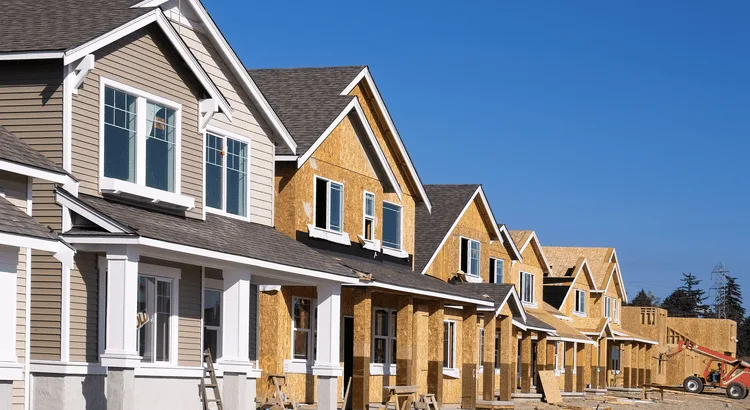
Buying a home can feel challenging even when affordability improves. If finding something within your budget has been difficult, a smaller newly built home may be worth a closer look.
Builders have responded to affordability concerns by focusing on smaller single-family homes and offering buyer incentives. Both can help buyers looking for a home that fits their finances.
The question is not simply whether you can buy more square footage. It is whether you can find the space you need at a price and monthly payment that work for you. Here is how smaller new homes fit into that conversation.
Why Builders Shifted Toward Smaller Homes
During the pandemic, buyers were looking for larger homes, and many could afford them. Builders responded with bigger spaces that helped accommodate working from home, setting up home gyms, and creating extra rooms for virtual school.
As affordability became tighter, builders shifted their focus toward smaller single-family homes. Census data documented a significant trend toward smaller newly built homes.
The reasoning is straightforward: builders want to build homes that meet buyer demand and will sell. In the shift described by that research, better affordability became buyers’ number one priority.
Smaller homes typically come with smaller price tags. That gives buyers a reason to consider less square footage and builders a reason to produce it.
Buyer Preferences Help Explain the Change
The National Association of Home Builders reported that buyers were looking for homes around 2,070 square feet, compared with 2,260 square feet two decades earlier in its comparison.
That finding helps explain why builders have adjusted the size of the homes they produce. The focus is not just on building less space. It is on responding to what buyers want and can afford.
Orphe Divounguy, identified in the original research as a senior economist at Zillow, described the connection this way:
“Not only are cash-strapped buyers continually seeking out lower-cost options, but developers are changing what type and size of home they’re producing to try and meet that need.”
For a buyer, the practical takeaway is simple: do not rule out new construction just because your budget is tight. Smaller new homes belong on your list of options to explore.
How a Smaller New Home May Help Your Budget
A lower purchase price is one reason to consider a smaller home. If larger homes have been outside your budget, looking at homes with less square footage may give you more budget-friendly choices.
That does not mean every smaller home will be the right fit. It means square footage is worth reconsidering before you decide there is nothing available that meets your needs.
Start by separating the space you need from the space you would simply like to have. Think back to the reasons buyers sought larger homes: an office, a gym, or extra rooms for school. Which of those uses actually applies to your household?
Ask yourself:
- Which rooms would I use every day?
- Do I need a separate room for each activity?
- What space would I be comfortable giving up?
- Would I rather have additional square footage or focus on a smaller price tag?
These questions are not about talking yourself into a home that feels too small. They are about giving yourself a clear way to judge whether a smaller home could still meet your goals.
Builder Incentives Are Worth Exploring
Along with smaller homes, builders have offered incentives that can help on the affordability front. Those incentives can include price reductions and mortgage rate buydowns.
Zonda data cited in the original reporting found that more than half of builders were offering incentives, including some mortgage rate buydowns. That finding describes the research cited, rather than a promise about what any particular builder will offer.
Those perks could help lower a buyer’s future monthly housing payment. If you are considering a new home, ask what incentives are available for that property instead of assuming an advertised benefit applies to every home.
Keep the Monthly Payment in the Conversation
John Burns, CEO of John Burns Research & Consulting, summed up the importance of affordability:
“The monthly payment matters more than anything else and builders have responded with smaller, more efficient homes.”
A home’s price deserves attention, but keep your potential monthly housing payment in the discussion, too. The goal is to understand whether the home and any offered incentive support your budget.
Before deciding, bring a few direct questions to the builder and your mortgage professional:
- Is a price reduction available on this home?
- Is a mortgage rate buydown being offered?
- What would the offered incentive mean for my potential monthly payment?
- What details should I review before making a decision?
You do not need to make a decision based on the word “incentive.” Ask for the details and make sure you understand the offer.
New Construction Offers More Than a Smaller Footprint
Affordability is the main reason to explore this option, but it is not the only benefit described in the research. With new construction, you also get brand-new everything, fewer maintenance needs, and some of the latest features available.
Those benefits are worth including in your comparison. As you look at homes, consider both the space itself and what appeals to you about buying something newly built.
What features matter to you? How important are fewer maintenance needs? Does the home provide the rooms you actually want to use? Keep those answers alongside your budget rather than letting any single feature make the decision for you.
Your Next Step: Compare What Is Available Locally
Builders’ focus on smaller homes has created more budget-friendly options for buyers. If finding the right home has felt difficult, broadening your search to include smaller new construction is a practical next step.
Work with a local real estate agent to see what is available where you want to live. Ask about smaller floor plans, pricing, and any builder incentives. Then bring those details into a conversation about your financing and potential monthly payment.
Start with your budget and a short list of must-have spaces. Reach out to Ed Parcaut to talk through your mortgage questions and whether a smaller newly built home could fit your homebuying goals.