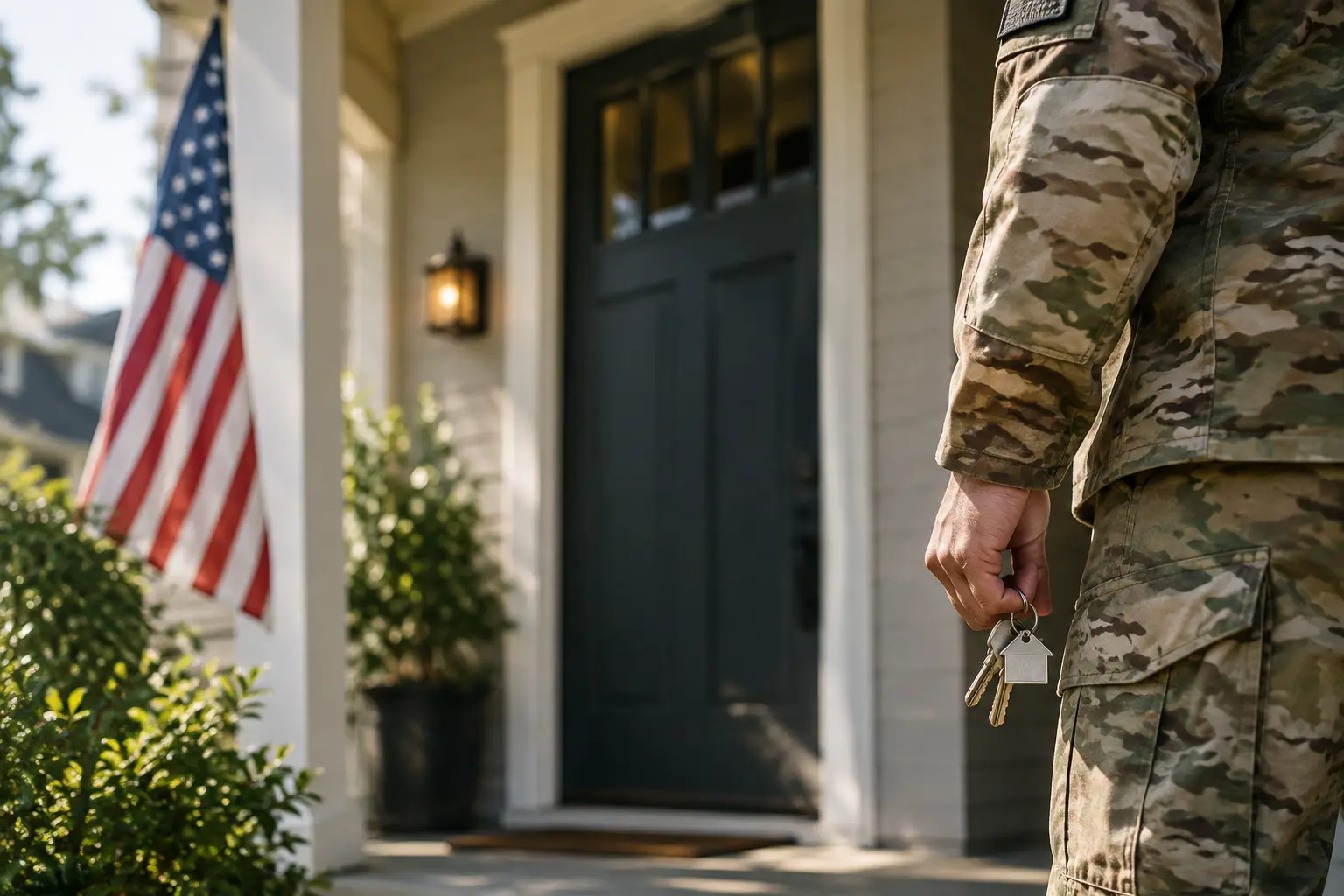
A VA home loan can make homeownership more accessible, but the benefit does not handle every part of the purchase for you. Your eligibility, household budget, property choice and purchase contract still need to work together.
For veterans, active duty service members and military families, the challenge is often timing. Orders arrive. A lease ends. A previous home has not sold. A seller wants certainty before accepting an offer.
The best approach is to resolve the questions that could change your deal before you commit to a house. Here is how to connect the benefit you earned with a purchase you can realistically carry through closing.
Start With Entitlement, Not a Price Range
Your Certificate of Eligibility, or COE, helps a lender verify your eligibility and available entitlement. Entitlement is the amount of backing the VA makes available to the lender. It is not cash you receive or a promise that you qualify for a particular loan.
The lender still evaluates income, credit, debts and the money left for household expenses. VA underwriting includes residual income requirements, so the conversation goes beyond a credit score and a monthly payment.
With full entitlement, the VA does not impose a loan limit for a purchase with no down payment. That does not mean unlimited borrowing. Your lender must approve the amount, and the property's appraised value matters.
If some entitlement remains tied to another loan, the calculation changes. Remaining entitlement and applicable county loan limits can affect whether a down payment is required.
Before shopping, ask your lender to review the actual COE and calculate your position. Mention every previous VA loan, including any involving foreclosure, a short sale or an assumption. Do not rely on a remembered loan balance or an old eligibility conversation.
A Previous VA Loan Does Not Automatically End the Benefit
The VA benefit can be used more than once. The practical question is whether you have enough available entitlement for the next purchase or need to restore entitlement first.
If You Sell the Previous Home
Selling the property and paying off the VA loan generally creates a path to restoring the entitlement used for that loan. Confirm the documentation and timing with your lender, especially if the sale and new purchase are close together.
If You Keep the Previous Home
You may be able to purchase another primary residence with remaining entitlement while keeping the existing VA loan. You must still qualify for the obligations involved and meet occupancy requirements for the new purchase.
Do not assume projected rent from the old home will fully offset its payment. The lender will determine whether rental income can be used and what documentation or reserves are required.
A one-time restoration may also be available when a prior VA loan has been paid off but the property is retained. Refinancing out of a VA loan does not, by itself, mean your entitlement has automatically been restored.
An assumption deserves special attention. Someone taking over your VA loan does not necessarily free your entitlement. Ask about substitution of entitlement and release of liability rather than treating them as the same issue.
Separate the Funding Fee From the Rest of Your Cash Needs
The VA funding fee is a program charge that applies to many borrowers. It is separate from lender charges, title costs, prepaid insurance, property taxes and other closing expenses.
The amount depends on factors such as the loan type, down payment and whether you have used the benefit before. Some borrowers are exempt, including qualifying veterans receiving VA disability compensation and certain other eligible borrowers.
Have your exemption status verified before building your final cash plan. If a disability claim is pending, ask how that affects the transaction. A later refund may be possible under qualifying circumstances, but do not budget around an assumed refund.
For a VA purchase, the funding fee can generally be financed into the loan. That reduces the cash needed at closing but increases the balance and the interest paid if you carry the loan over time.
Paying it upfront keeps the balance lower but uses savings. For a family managing moving costs, temporary lodging or uncertain repairs, preserving a reasonable cash cushion may matter more than minimizing the starting balance.
Ask for written comparisons showing cash to close and the total monthly payment, including taxes, insurance and any association dues. No down payment does not mean no closing costs, and no monthly mortgage insurance does not mean the payment contains only principal and interest.
Choose a Property That Fits the Financing
A VA appraisal serves two main purposes: developing an opinion of value and checking the property against VA minimum property requirements. Those requirements address basic safety, sanitation and structural soundness.
The appraisal is not a home inspection. Hire an independent inspector to examine the property's condition and explain potential repair costs. A house can meet appraisal requirements and still have maintenance issues you need to understand.
Obvious problems, such as an active roof leak, exposed wiring or an unsafe access point, deserve attention before you make an offer. Some conditions may require repairs before closing.
A fixer-upper is not automatically impossible, but a standard VA purchase may be a poor fit if major work is needed and the seller will not address it. Specialized renovation financing may have different availability and requirements.
If the Value Comes in Low
A low appraisal can lead to renegotiating the price, requesting a reconsideration of value supported by appropriate evidence, contributing additional cash or leaving the transaction under applicable protections.
The VA escape clause generally protects a buyer from being compelled to complete the purchase or forfeit earnest money when the price exceeds the VA-established value. It does not force the seller to lower the price or excuse unrelated contract obligations. Review the language and deadlines with your agent and lender.
Help the Seller Read the Offer Clearly
A seller usually wants to know three things: Can this buyer close, what will I net, and what could delay the sale?
A VA offer should answer those questions rather than rely on the seller understanding military benefits. Zero down payment is a financing feature, not proof that the buyer lacks savings or financial strength.
- Show preparation. Have income, assets, credit and eligibility reviewed as thoroughly as possible before offering.
- Make requests specific. Separate the purchase price, closing-cost assistance and repair requests so the seller can evaluate the terms.
- Use a realistic schedule. Account for appraisal, inspections, repairs and any sale needed to complete your purchase.
- Address property concerns early. Do not wait until the appraisal to discuss an obvious condition issue.
VA financing does not automatically require the seller to pay all buyer closing costs. Rules distinguish ordinary closing-cost assistance from seller concessions, and certain charges cannot be paid by the veteran. Have your lender structure any requested assistance correctly.
A stronger offer is not necessarily one that gives up every protection. Keep inspection, financing and value risks understandable before deciding what you can accept.
Build the Plan Around Your Family's Move
VA purchase loans are generally for a primary residence, not a vacation home or an investment-only purchase. Deployment, a pending transfer or occupancy by a spouse can raise special questions. Explain the actual living arrangement to your lender early.
Your next step is simple: gather your COE, income documents, savings information and details of any previous VA loan. Then reach out to Ed Parcaut, a U.S. Navy veteran and Modesto mortgage professional, NMLS 235384, to review entitlement, compare cash needs and build a purchase plan around your family's move.