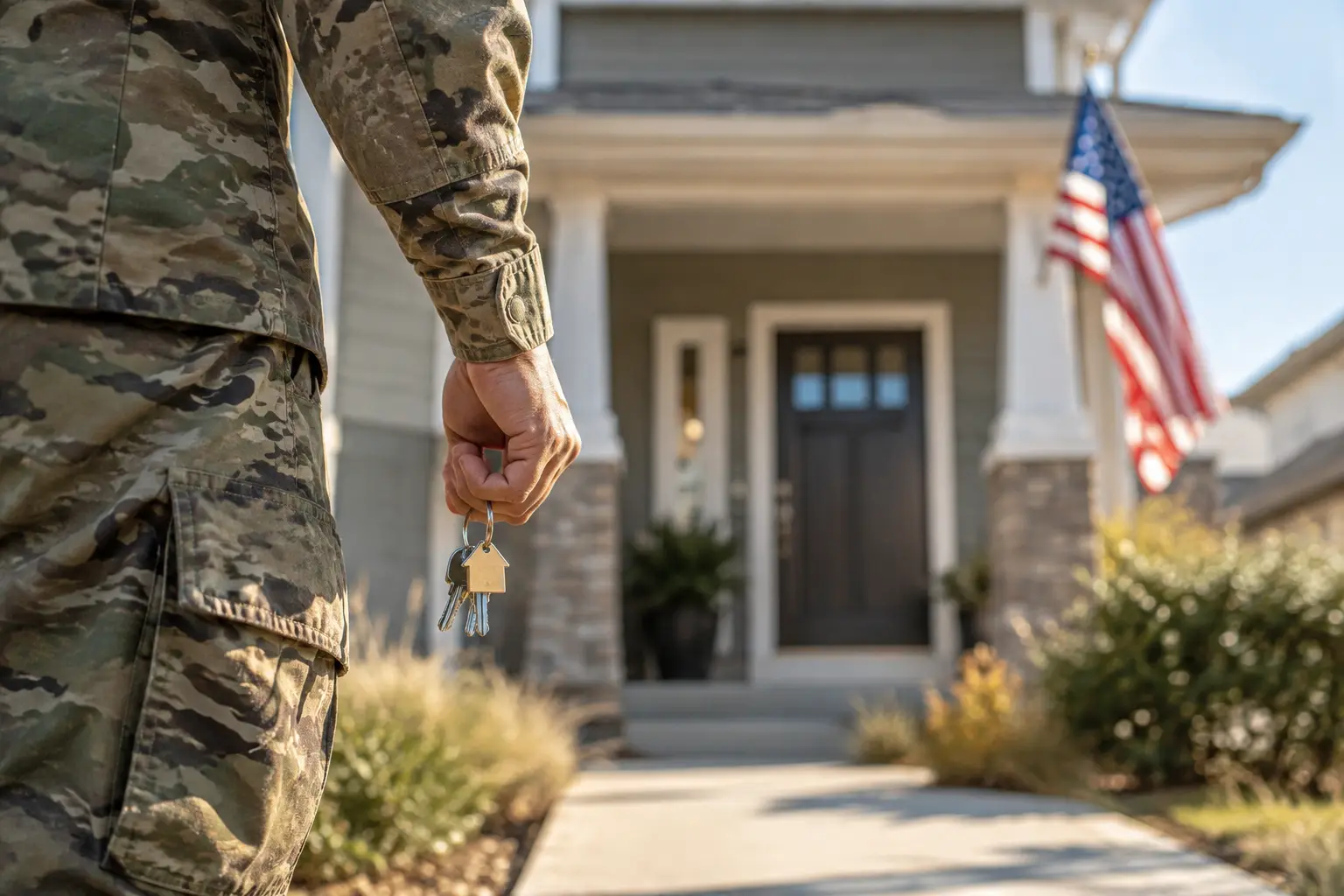
A VA home loan can help you buy with no down payment when your eligibility, entitlement, and financing situation allow it. It also does not require monthly mortgage insurance. Those are meaningful advantages, but they do not answer every question about the purchase.
For veterans, active duty service members, and military families, the better question is this: How does this loan fit the house, the household budget, and the next move?
Five decisions deserve attention before you start writing offers. Getting them right will not guarantee approval or a smooth transaction, but it can help you spot problems while you still have options.
1. Find Out What Entitlement You Have Available
Entitlement is the amount of VA backing available for an eligible borrower’s loan. It is not money deposited into your account, and it is not the amount a lender has agreed to lend you.
Your Certificate of Eligibility, or COE, helps document your eligibility and entitlement status. Your lender still needs to review income, credit, debts, and the property.
Full entitlement and remaining entitlement are different situations. With full entitlement, the VA does not impose a loan limit for a purchase without a down payment. That does not mean unlimited borrowing. The lender must determine what you qualify for, and the property must support the financing.
If some entitlement remains tied to another VA loan, the calculation changes. County loan limits can affect how much you can borrow without a down payment. A higher purchase price may require cash down even if you otherwise qualify.
What to Do Before Shopping
- Have your lender obtain and review your COE.
- Disclose every previous VA loan, including loans on homes you sold.
- Provide payoff or sale records if an old loan still appears on your entitlement record.
- Ask for a purchase-price calculation based on your actual entitlement, not a generic online estimate.
If your spouse is also an eligible service member or veteran, ask how using one or both benefits would affect this purchase and future flexibility. More than one structure may be possible.
2. Compare the Funding Fee With Your Cash Priorities
The VA funding fee helps support the loan program. Unless you qualify for an exemption, it is generally part of a VA purchase loan. Its amount depends on factors such as whether you have used the benefit before and how much you put down.
Some borrowers are exempt, including veterans receiving VA compensation for service-connected disabilities. Other qualifying circumstances exist, including certain surviving spouses and active duty Purple Heart recipients. Have the lender verify your status rather than assume you owe the fee.
If the fee applies, you can generally pay it at closing or finance it into the loan.
- Financing the fee preserves cash, but increases the loan balance and the interest paid over time.
- Paying it upfront keeps that fee out of the balance, but leaves less money available for moving, repairs, and emergencies.
- Making a down payment may reduce the applicable fee at certain thresholds, but uses cash that may have other important jobs.
Ask for side-by-side Loan Estimates for realistic options. Compare cash to close, monthly payment, loan balance, and how much savings you would have left.
No down payment does not mean no closing costs. You may still need money for lender and settlement charges, prepaid insurance, taxes, and other expenses. Seller credits or lender credits may help, but each has rules and trade-offs. A lender credit can involve accepting a higher interest rate.
3. Treat the Appraisal and Inspection as Separate Protections
A VA appraisal serves two main purposes: assessing the property’s value and checking whether it meets VA minimum property requirements. Those requirements address basic safety, soundness, and sanitation.
An appraisal is not a home inspection. It does not replace a detailed review of the roof, plumbing, electrical system, foundation, or other components. An independent inspection can help you understand repair needs and ownership costs that an appraisal may not uncover.
A well-maintained older home is not automatically a problem for VA financing. A house with unresolved safety issues or significant condition problems may be harder to finance without repairs.
If the Property Needs Repairs or Appraises Low
Required repairs can create a negotiation over who pays, who completes the work, and whether the closing timeline still works. Discuss that possibility before offering on a property with obvious condition concerns.
If the appraised value comes in below the price, options may include negotiating a lower price, requesting a reconsideration of value with supporting evidence, or bringing additional cash. A reconsideration is not a promise of a higher value.
The VA escape clause generally protects buyers from being forced to complete a purchase or forfeit earnest money solely because the price exceeds the VA-established value. Have your agent and lender explain how that protection fits your contract. Do not assume it replaces every other contingency.
4. Plan for Reuse Before Your Next Move
The VA home loan benefit is not necessarily a one-time benefit. Eligible borrowers can use it again, but available entitlement and restoration rules matter.
Selling the home and paying off the VA loan generally allows you to request restoration of the entitlement used. Do not assume the paperwork updates automatically.
You may also be able to keep a home with an existing VA loan and use remaining entitlement for another primary residence. That requires enough entitlement and the ability to qualify financially. Keeping the first mortgage can affect qualification even if you plan to rent the property.
There is also a one-time restoration option that may apply when a VA loan has been paid off but you still own the property. Ask about the conditions before building a purchase plan around it.
VA purchase loans are intended for primary residences, not investment-property purchases. Occupancy rules include provisions for certain military circumstances, so active duty buyers should discuss deployment, spouse occupancy, and move-in timing with their lender early.
5. Help the Seller Evaluate the Actual Offer
A seller wants to understand the net proceeds, the timeline, and the likelihood that the transaction will close. Some sellers mistake a VA buyer’s low down payment for weak finances. Others assume VA financing requires the seller to pay all closing costs. Neither assumption is accurate.
Your offer can address uncertainty without giving away protections you need.
- Get a documented preapproval review rather than relying only on a quick payment estimate.
- Match requested credits to your actual cash needs.
- Use a closing timeline your lender can reasonably support.
- Discuss visible property issues before negotiations begin.
- With your permission, have your lender explain the financing process to the listing agent without sharing private financial details.
A clean offer is not necessarily an offer without contingencies. It is an offer with clear terms, realistic expectations, and fewer unanswered questions.
Put the Decisions Together Before You Commit
Start with your COE, income documents, current mortgage information, and a household budget that includes maintenance and savings. Then compare financing choices around both the purchase and your likely next move.
Reach out to Ed Parcaut, a U.S. Navy veteran and Modesto mortgage professional, NMLS 235384, to review your entitlement, funding fee status, and buying plan before you make an offer.