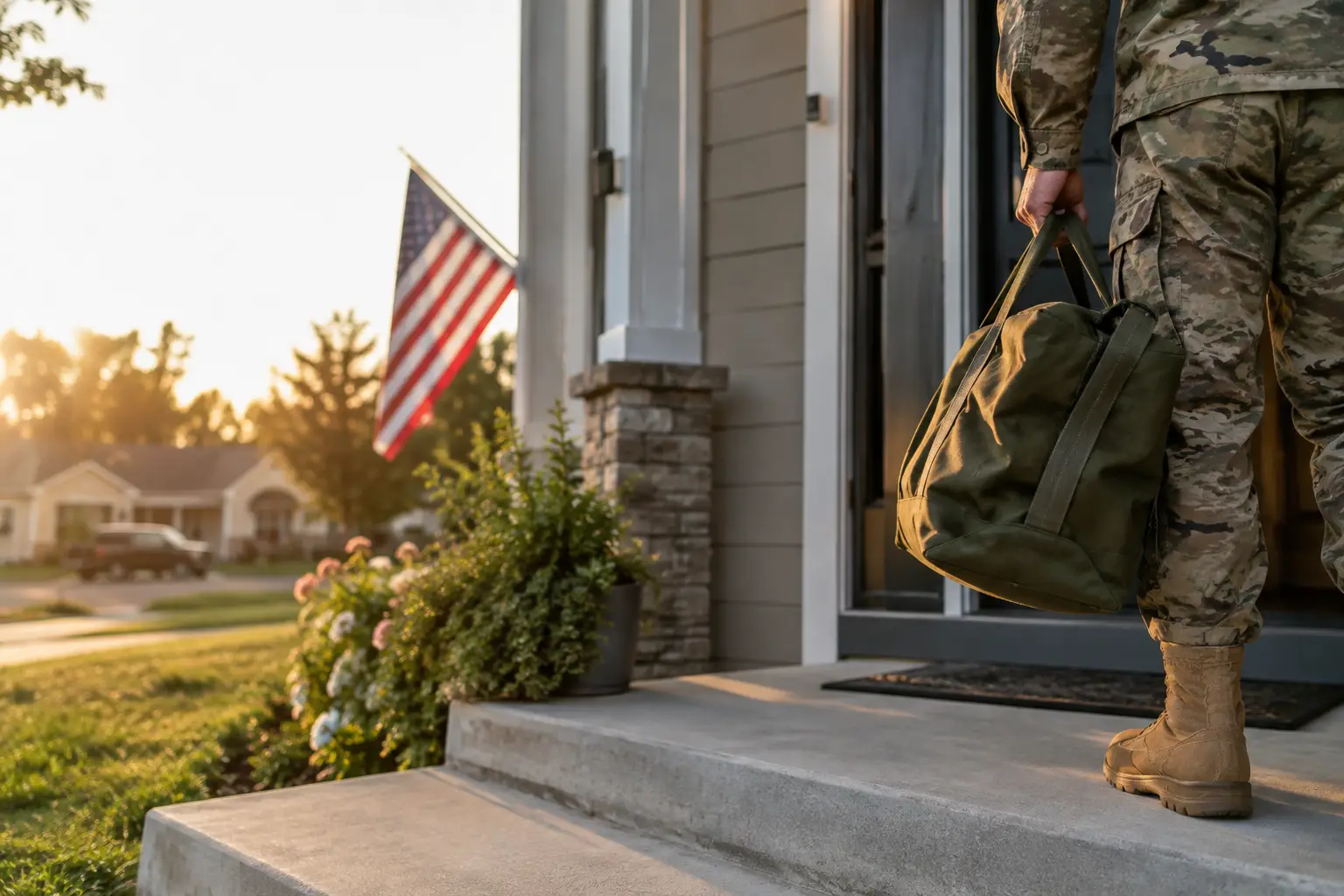
A military family finds a house that fits. The seller likes the offer but worries that VA financing means repairs, extra costs, or a difficult closing. Meanwhile, the buyers assume their VA benefit takes care of everything.
Both sides need better information.
A VA-backed loan can be a powerful financing tool for eligible veterans and active duty service members. But the benefit, the borrower, the property, and the contract each have a separate job. Understanding those pieces helps families make sound decisions and gives sellers a clearer picture of the offer.
Eligibility Is the Starting Point, Not the Approval
Your Certificate of Eligibility, usually called a COE, tells a lender about your eligibility and entitlement. It does not establish how much you can afford or guarantee loan approval.
The lender still reviews income, credit, debts, and the money needed to close. VA underwriting also considers residual income, the money left for household expenses after certain obligations.
For military families, income deserves an early conversation. A coming separation, retirement, or change in duty station can affect which income the lender can use. Do not assume every allowance or future paycheck will be treated the same way.
First step: Get your COE reviewed alongside your financial documents. A benefit check without an income review is only half the preparation.
Entitlement: What Is Available for This Purchase?
Entitlement is part of the VA guaranty that supports your loan. It is not cash deposited into your account, and it is not a personal spending limit.
With full entitlement, VA does not impose a loan limit for a purchase with no down payment. That does not mean unlimited borrowing. You must still meet the lender's requirements, and the property's value must support the transaction.
If you have entitlement tied to another VA loan, the calculation changes. Remaining entitlement, the property's county loan limit, and the proposed loan amount can affect whether a down payment is needed.
If You Already Own a VA-Financed Home
You may have several paths:
- Sell and pay off the existing loan. You can generally request restoration of the entitlement used for that property.
- Keep the home and use remaining entitlement. Another VA purchase may be possible, subject to entitlement, occupancy, and financial qualifications.
- Pay off the loan but keep the property. A one-time restoration option may be available. Have the lender verify the requirements before relying on it.
Restoration is not something to assume has happened automatically. Ask what paperwork is needed and when the updated entitlement can be confirmed.
A prior foreclosure or loss involving a VA loan also deserves individual review. It does not necessarily mean the benefit is gone forever, but it can affect available entitlement.
The Funding Fee Belongs in the Budget Early
VA purchase loans do not require monthly mortgage insurance. However, many borrowers pay a VA funding fee. That fee helps support the loan program and is separate from ordinary closing costs.
The amount depends on factors including the loan type, whether you have used the benefit before, and your down payment. Some borrowers are exempt, including many veterans receiving compensation for service-connected disabilities. Other exemption categories exist, so have your status verified.
For a purchase, the funding fee can generally be paid at closing or financed into the loan. Financing preserves cash upfront, but increases the balance and the interest paid over time.
A down payment may reduce the fee for a nonexempt borrower. Still, using savings solely to reduce a fee may leave you short for moving expenses, repairs, or emergencies.
Ask for a comparison showing:
- Cash needed at closing.
- The loan balance with and without a financed funding fee.
- The monthly payment and remaining savings.
If a disability compensation claim is pending, tell the lender. A later award may support a funding fee refund when its effective date meets VA requirements. Do not build your closing budget around a refund that has not been confirmed.
The Appraisal and Inspection Do Different Jobs
A VA appraisal evaluates market value and whether the property meets VA minimum property requirements. Those requirements focus on basic safety, sanitation, and structural soundness.
A home inspection is a separate, more detailed look at the property's condition. The appraisal is not a substitute for it.
An older Modesto home does not need to look new to qualify. Cosmetic wear is different from an active roof leak, an unsafe electrical condition, or a missing essential system. The actual condition matters more than the home's age.
When Repairs or a Low Value Affect the Deal
If the appraisal identifies required repairs, someone must address them before the loan can close unless an approved alternative applies. The contract and negotiations help determine who handles the work and expense. VA financing does not automatically make every repair the seller's responsibility.
If the appraised value comes in below the price, options may include negotiating a lower price, bringing additional cash, or requesting a reconsideration of value supported by relevant evidence. None guarantees a different result.
The VA escape clause generally protects a buyer from being required to complete the purchase or forfeit earnest money solely because the price exceeds VA's established reasonable value. Review its application with your agent and lender before deciding how to proceed.
How a Seller Evaluates a VA Offer
A seller wants to know whether the buyer can close, what the seller will net, and where the transaction could get stuck.
A low-down-payment or no-down-payment loan does not, by itself, signal a weak buyer. Likewise, a large down payment does not eliminate underwriting or property problems.
A credible VA offer gives the seller useful facts:
- Financing preparation. The lender has reviewed the buyer's documents, not simply collected an online application.
- Clear cost requests. Any requested seller-paid closing costs or concessions are spelled out.
- A realistic schedule. The closing timeline accounts for underwriting, appraisal, and known property concerns.
- Good communication. With the buyer's permission, the lender can explain the financing readiness without sharing private financial details.
Sellers are not automatically required to pay all of a VA buyer's closing costs. VA does restrict certain borrower charges, and seller concessions have specific rules. Have the lender and agent distinguish ordinary closing-cost assistance from concessions rather than treating every seller payment alike.
Plan for the Next Move, Too
VA purchase financing is intended for a primary residence, not a vacation home or a property purchased solely as an investment. Deployment and active duty circumstances may allow occupancy through a spouse or another qualifying arrangement, but confirm the rules for your situation.
If your plan is to keep the house after your next move, consider maintenance, vacancies, and the possibility of carrying two housing payments. Potential rent is not automatically qualifying income.
Your practical next step: Gather your COE, income records, existing mortgage information, and a realistic cash budget. Then reach out to Ed Parcaut, a U.S. Navy veteran and Modesto mortgage professional, NMLS 235384, to review your entitlement, compare costs, and build a purchase plan that fits your family's next chapter.