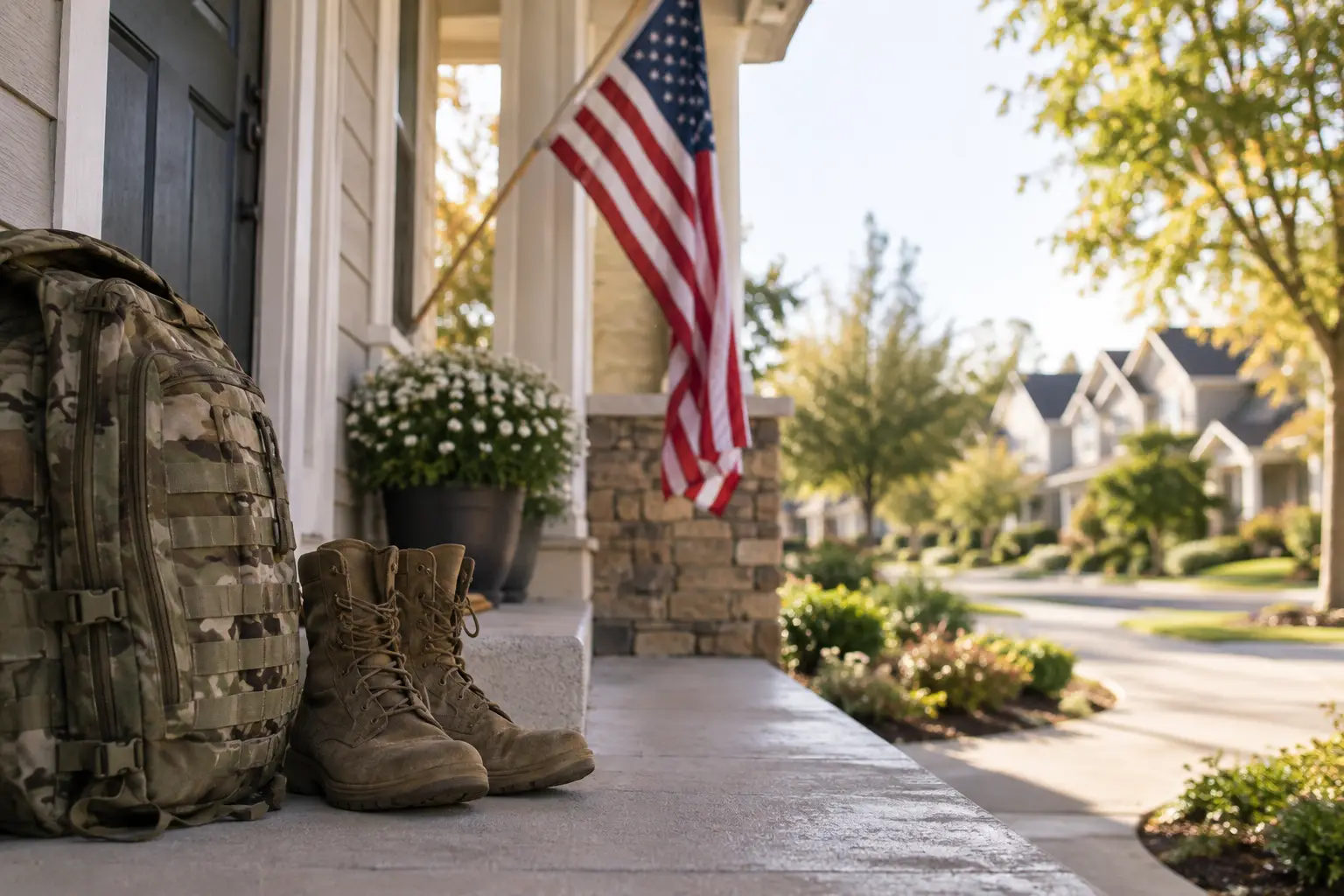
A military household rarely makes a housing decision in isolation. There may be a deployment, a permanent change of station, a spouse’s job, or a home from a previous assignment in the picture.
The VA home loan benefit can help, but the best financing choice depends on how those pieces fit together. A loan with no required down payment is valuable. It still needs to work with your cash reserves, monthly budget, and plans for the property.
Here is how to sort through the major decisions before a purchase contract puts you on a deadline.
Start With Eligibility, Then Check Buying Power
Your Certificate of Eligibility, commonly called a COE, tells the lender about your eligibility and entitlement. It does not approve you for a mortgage or establish an affordable payment.
The lender still reviews income, credit, debts, and the VA’s residual income requirements. Residual income considers the money left for household living expenses after certain obligations.
For active duty borrowers, the lender may also need to understand which pay and allowances are expected to continue. An approaching separation or retirement can change the documentation needed.
Start with two separate questions: Can you use the benefit, and does the proposed payment fit your household? Include property taxes, insurance, association dues, utilities, and maintenance in that second answer.
Entitlement Matters Most When You Have Used VA Before
Entitlement is the amount of VA backing available for your loan. It is not cash you can withdraw, and it is not the same as your maximum purchase price.
With full entitlement, VA does not impose a county-based loan limit on how much you may borrow without a down payment. You still must qualify with the lender, and the property must support the financing.
If some entitlement remains tied to another VA loan, the calculation changes. County loan limits can affect how much you can borrow without a down payment. Depending on the purchase and available entitlement, a down payment may be necessary.
Keeping Your Previous Home
You may be able to buy another primary residence with a VA loan while keeping an existing VA-financed home. That requires enough remaining entitlement, qualification for the obligations, and compliance with occupancy rules.
Do not assume a future tenant makes the old mortgage disappear from underwriting. The lender must determine whether rental income can be counted and what documentation is required.
VA purchase financing is generally for a primary residence, not a vacation home or a property bought solely as an investment. Deployment and spouse occupancy can involve special rules, so explain your actual living arrangements before choosing a financing plan.
Reuse Is Possible, but Restoration Takes Attention
The VA benefit is not limited to one purchase. Eligible borrowers can use it again, but entitlement restoration is not something to leave to guesswork.
Selling a VA-financed property and paying off its loan generally provides a path to restoring the entitlement used. Confirm the payoff and restoration documentation with your lender.
Paying off a VA loan while keeping the property may allow a one-time restoration of entitlement. That option has specific requirements and should be reviewed before you rely on it for another purchase.
An assumption deserves extra care. If someone assumes your VA loan, a release of liability and restoration of entitlement are separate issues. Your entitlement may remain tied to the loan unless an eligible veteran substitutes their entitlement and the required approvals occur.
Before selling, refinancing, or arranging an assumption, ask what happens to both your liability and your entitlement.
Compare the Funding Fee With the Whole Loan
Many VA borrowers pay a funding fee that helps support the program. The amount depends on factors such as loan type, first or subsequent use, and down payment.
Some borrowers are exempt. Exemptions can include veterans receiving qualifying service-connected disability compensation, certain eligible surviving spouses, and active duty Purple Heart recipients. Other qualifying circumstances may apply. Have the lender verify your status rather than assuming either that you owe the fee or that you are exempt.
For a VA purchase, the funding fee can generally be financed. That reduces the cash needed at closing, but increases the loan balance and the amount on which you pay interest.
Compare these choices using actual loan estimates:
- Finance the fee: Preserve cash for moving costs, repairs, and emergencies.
- Pay the fee upfront: Keep the financed balance lower, but use more savings.
- Consider a down payment: It may reduce the fee when applicable and lower the balance, but leaves less money accessible.
VA loans do not require monthly mortgage insurance. That is an important advantage, but compare total payment, closing costs, and remaining savings with other financing options. No down payment does not mean no cash needed.
The Appraisal Checks Value and Property Requirements
A VA appraisal has two important jobs: provide an opinion of value and evaluate whether the property meets VA minimum property requirements. Those requirements focus on concerns such as safety, sanitation, and structural soundness.
The appraisal is not a home inspection. Hire an independent inspector to evaluate the home’s condition more thoroughly. An appraisal is not a warranty against future repairs.
A property with significant condition problems can complicate VA financing. Before offering, ask your agent about visible issues and discuss possible concerns with the lender. Avoid spending money on a seller’s repairs without clear agreements and professional guidance.
If the appraised value comes in below the contract price, options may include negotiating a lower price, requesting a supported reconsideration of value, or contributing cash if appropriate. Your contract and required VA escape clause provide important protections. Ask your agent and lender to explain them before you sign.
Help the Seller Understand Your Offer
A seller usually wants confidence that the buyer can close, a realistic timeline, and clarity about costs and repairs. VA financing alone does not make an offer weak.
Some sellers worry that they must pay all of a VA buyer’s closing costs. They do not. VA rules restrict certain borrower charges, but seller contributions are negotiated, not automatically required across the board.
Your offer becomes easier to evaluate when it includes:
- A lender preapproval based on reviewed documentation, with remaining conditions understood.
- A closing schedule that accounts for appraisal, underwriting, and military logistics.
- Clearly stated requests for seller-paid costs.
- A practical approach to inspection findings and any required repairs.
A higher price paired with a large seller credit may not be more attractive than a lower price with fewer concessions. Sellers consider net proceeds and execution risk. Keep your own affordability and protections in view rather than stretching simply to win.
Put the Pieces on One Page
Before house hunting, gather your COE, income records, current mortgage information, and a realistic cash budget. Ask for a review of available entitlement, funding fee status, estimated cash to close, and total monthly housing expense.
Then discuss what happens if orders change or you need to keep your current home. A useful loan conversation should address your next move as well as this purchase.
Reach out to Ed Parcaut, a U.S. Navy veteran and Modesto mortgage professional, NMLS 235384, to review those details and identify the next practical step for your household.