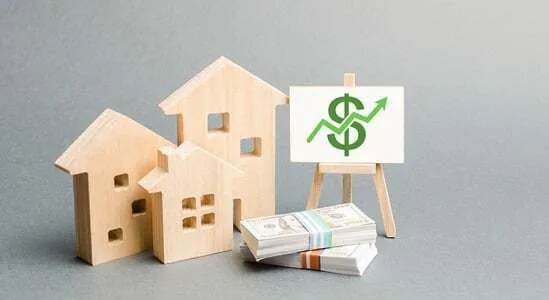
If you’re thinking about buying or selling a home, you probably have a straightforward question: Will home prices keep rising, or will they fall?
The outlook described in the original article was for continued appreciation, but at a more moderate pace as the housing market moved back toward pre-pandemic conditions. The reasoning came down to two forces: housing supply and buyer demand.
That distinction matters. Slower price growth means prices are still increasing, just less quickly. It is not the same thing as prices declining. But an expectation of appreciation is a forecast, not a promise that home values cannot fall.
To understand the argument for continued price growth, it helps to look at both sides of that supply-and-demand balance.
More Homes for Sale Does Not Necessarily Mean Enough Homes
The original article described a market where inventory was increasing but the overall supply of homes remained low. Those two conditions can exist together.
More available listings represent an increase in supply. Whether that increase is enough to meet buyer demand is a separate question. The argument for continued appreciation was not that inventory could never grow. It was that the shortage was too substantial to resolve overnight.
The article pointed to Census data on single-family home construction stretching back to the nineteen-seventies. That construction history helped explain why a growing number of homes for sale did not necessarily mean the underlying shortage had disappeared.
How the Building Shortfall Developed
Before the housing crash, homebuilding increased significantly. The original article connected that increase to strong buyer demand supported by loose lending standards, which allowed more people to qualify for home loans.
The resulting oversupply of homes for sale contributed to falling prices during the crash. Some builders then left the industry or closed their businesses.
What followed was a prolonged period of underbuilding. In other words, the earlier construction surge was followed by an extended stretch when too few new homes were built.
That history is central to the supply argument. Even with additional construction, making up for years of underbuilding takes time. The original article’s point was that more building could help address the deficit, but could not eliminate it overnight.
Keep the Two Supply Questions Separate
When you hear that housing inventory is growing, separate these questions:
- Are more homes becoming available?
- Are enough homes available to meet buyer demand?
The first question concerns the direction of supply. The second concerns the balance between supply and demand. The forecast for continued appreciation rested on that balance remaining tight, even as inventory improved.
Millennials Are Part of the Demand Story
Supply is only half of the explanation. The other half is the number of people looking to buy.
During the pandemic housing frenzy, demand exceeded the number of homes for sale. Buyers competed for available properties, pushing prices upward.
The original article also acknowledged that higher mortgage rates had moderated buyer demand. Its argument was not that demand would remain at the same intense level indefinitely. Instead, it pointed to a continuing source of potential buyers: millennials entering their prime homebuying years.
Why the Size of a Generation Matters
The article identified millennials as a large generation whose movement into peak homebuying years would support demand moving forward.
Odeta Kushi, identified in the original article as Deputy Chief Economist at First American, explained:
“. . . millennials continue to transition to their prime home-buying age and will remain the driving force in potential homeownership demand in the years ahead.”
The important word here is potential. The quoted outlook describes a source of demand. It does not promise a particular result for every buyer, seller or property.
The original article’s broader point was that demand could cool from its pandemic intensity without disappearing. Higher mortgage rates had dampened demand, while millennials entering their homebuying years continued to support it.
Why Supply and Demand Must Be Read Together
Neither increasing inventory nor moderating demand tells the whole story on its own. The original forecast depended on how those two forces interacted.
Bankrate summarized the conditions cited in the article this way:
“After all, supplies of homes for sale remain near record lows. And while a jump in mortgage rates has dampened demand somewhat, demand still outpaces supply, thanks to a combination of little new construction and strong household formation by large numbers of millennials.”
That quotation describes the conditions behind the original outlook, rather than a permanent description of the housing market.
The underlying argument was straightforward: limited construction and the lingering effects of underbuilding constrained supply, while millennial household formation supported demand. Together, those forces put upward pressure on home prices.
This explains why the article anticipated continued appreciation even as the market slowed. A reduction in the intensity of demand did not, in that outlook, erase the imbalance between buyers and available homes.
Slower Appreciation Is Different From Falling Prices
Appreciation means an increase in value. More moderate appreciation means a smaller increase, not a decline.
The original article forecast that home prices would continue rising at a slower pace as the market shifted toward pre-pandemic conditions. Its statements that prices would not fall expressed that forecast too definitively. The useful takeaway is the reasoning behind the expectation, not an assurance of a particular outcome.
For your own planning, keep three ideas separate:
- The conditions: limited housing supply and continuing buyer demand.
- The forecast: those conditions were expected to support further appreciation.
- Your decision: how to approach a purchase or sale without treating that forecast as a guarantee.
A Practical Next Step for Your Move
Before making a decision, write down the questions you need answered. If you’re buying, what purchase price and monthly payment are you comfortable considering? If you’re selling, how would your next housing step fit into your plans?
Use the supply-and-demand explanation as context, not as a promise about what prices will do. Reach out to Ed Parcaut to talk through your homebuying goals, financing questions and practical next steps.