You may earn a steady income and pay rent on time, yet still feel stuck when you look at your savings. Gathering the upfront cash to buy a home can be a major hurdle.
A large down payment is not your only path. Government-backed loans, conventional programs, and down payment assistance can help buyers with limited savings. The key is understanding both the entry requirements and the ongoing costs.
You Do Not Necessarily Need 20% Down
The advice to save 20% has been passed down for generations. It reflects lending practices that emphasized substantial upfront equity to reduce lender risk. But treating 20% as a universal requirement can keep buyers waiting unnecessarily.
If property prices rise while you save, your savings target can move further away. Many buyers purchase with less than 20%, and lenders offer programs specifically for people with limited available cash.
The useful question is not simply how much you can put down. It is which loan fits your credit, savings, eligibility, and monthly budget.
Compare Low-Down and Zero-Down Loans
FHA Loans: As Little as 3.5% Down
The Federal Housing Administration insures FHA loans. That backing reduces lender risk and supports more flexible qualifying terms, making FHA a common option for first-time buyers and people with past credit problems.
- Eligibility: A credit score of at least 580 meets the FHA threshold for 3.5% down. Scores from 500 to 579 may qualify with 10% down.
- Advantages: FHA loans are more forgiving of credit issues and allow family gifts to cover the entire down payment.
- Trade-offs: There is an upfront mortgage insurance premium and an annual premium that usually continues for the life of the loan.
VA Loans: A Zero-Down Option
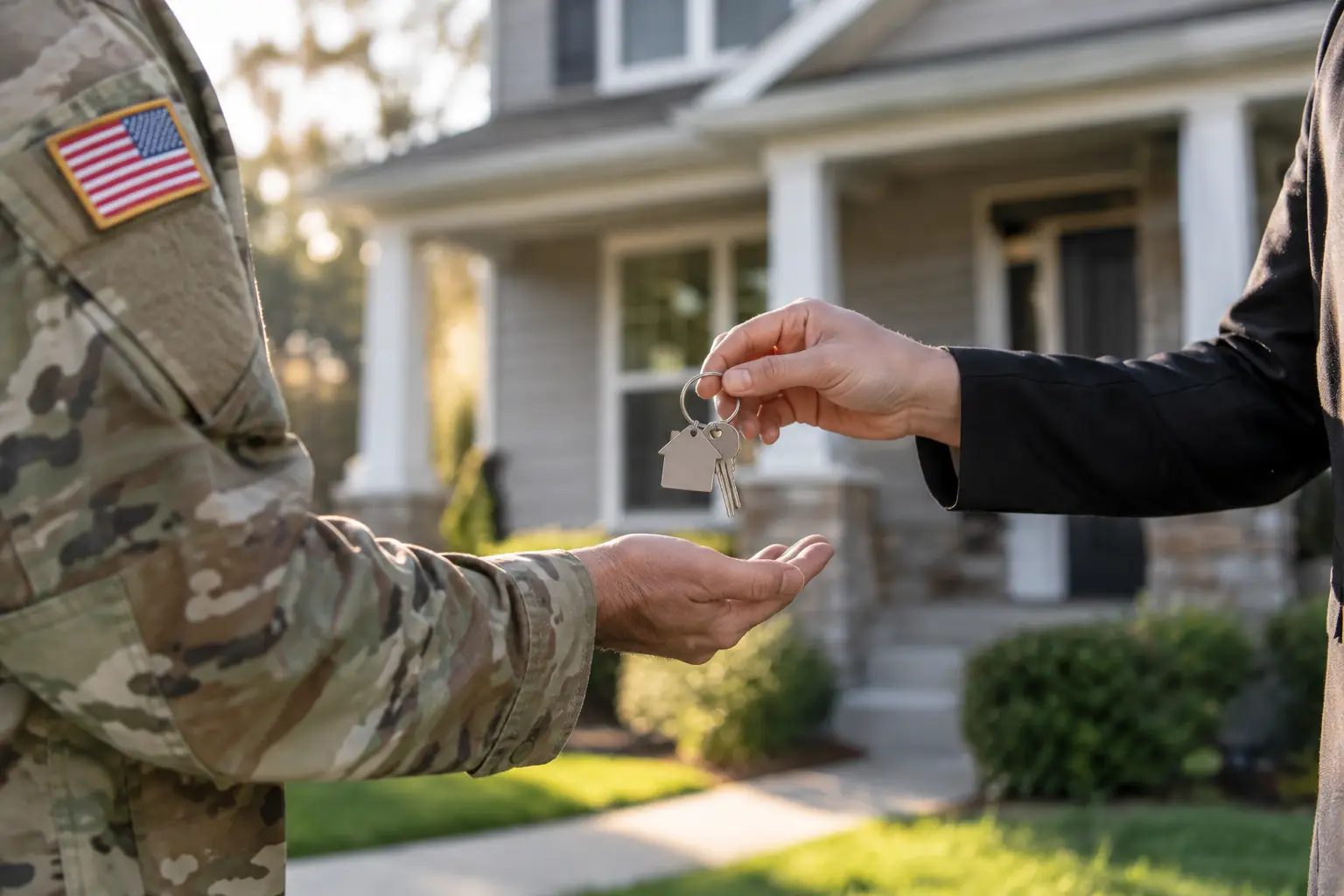
The Department of Veterans Affairs mortgage program deserves a close look if you have served in the military. Compare it carefully before choosing another loan.
- Eligibility: The program serves qualifying active-duty service members, veterans, and eligible surviving spouses. A valid Certificate of Eligibility, or COE, documents eligibility.
- Advantages: VA loans offer zero-down financing without monthly mortgage insurance. They also offer competitive interest rates and limits on certain closing costs lenders can charge.
- Trade-offs: A one-time VA funding fee may apply. The fee range described here is 1.25% to 3.3% of the loan amount, and it can be financed into the mortgage balance.
USDA Loans: Zero Down in Eligible Areas
The U.S. Department of Agriculture backs loans that encourage homeownership in rural and developing suburban areas. You do not have to buy a farm. Residential neighborhoods outside major cities may qualify.
- Eligibility: Total household income generally cannot exceed 115% of the area's median income. The home must be within a USDA-eligible area.
- Advantages: USDA offers 100% financing, with no down payment required. Interest rates are generally lower than conventional loan rates.
- Trade-offs: Geographic and income restrictions limit eligibility. An upfront guarantee fee and an annual fee serve a role similar to mortgage insurance.
Conventional Programs: As Little as 3% Down
Fannie Mae and Freddie Mac offer low-down-payment options, including HomeReady and Home Possible, for buyers with good credit but limited cash reserves.
- Eligibility: These options typically call for stronger credit than FHA, commonly described as 620 or higher. Some programs also have income limits.
- Advantages: Eligible buyers can put down 3%. Private mortgage insurance can be canceled when the applicable equity requirements are met, rather than necessarily lasting for the entire loan.
- Trade-offs: Credit requirements are stricter. With a lower credit score, the interest rate and mortgage insurance costs may be substantially higher than an FHA alternative.
Reaching 20% equity is an important benchmark when discussing conventional mortgage insurance cancellation. Ask your lender how cancellation would work for the loan you are considering, rather than assuming it happens automatically.
Look Into Down Payment Assistance
Even a small percentage can represent substantial cash. On a $381,000 home, a 3% down payment is $11,430.
State and local governments and nonprofit organizations offer down payment assistance, often called DPA. These programs can help bridge the savings gap, but their repayment terms differ.
- Grants: Assistance that does not need to be repaid under the program's terms.
- Forgivable loans: Debt that is forgiven when you meet requirements, such as living in the home for a specified number of years.
- Deferred-payment loans: Money provided upfront, with repayment delayed until an event such as selling the home or refinancing.
Start with your state's official housing finance agency website. You can also speak with a local approved lender who works with first-time buyer assistance.
Understand the Monthly Trade-Offs
Mortgage Insurance Adds to Your Payment
Conventional loans generally require private mortgage insurance, or PMI, when you put down less than 20%. PMI protects the lender if you default, not you.
The original cost examples range from $65 to nearly $380 per month, depending on credit and loan characteristics. Treat those figures as illustrations, not a quote for your situation. PMI can make buying sooner possible, but it provides no direct financial protection to the borrower.
A Smaller Down Payment Means More Borrowing
For the same purchase price, putting less down means borrowing more. That raises your principal and interest payment when other loan terms are equal. It also increases the total interest paid over a 30-year loan.
A manageable upfront cost is only helpful if the monthly payment is manageable, too. Compare the full payment rather than choosing solely by the down payment requirement.
A Practical Plan to Get Started
- Review and protect your credit. Pull your credit reports and check for errors. Pay down credit card balances, make payments on time, and avoid opening new accounts while preparing to buy.
- Set your own payment limit. Use your actual take-home pay to calculate a comfortable housing budget. Do not rely solely on the maximum a lender offers. Include likely mortgage insurance and higher utility bills.
- Find a lender familiar with your options. Not every bank offers every loan or participates in local assistance programs. Look for experience with FHA, VA, and first-time buyer financing.
- Research local assistance. Review your state's housing agency resources and income requirements for grants or tax credit programs. Bring your findings to the lender.
- Request a full pre-approval. Ask for income and asset verification rather than only a basic pre-qualification. A documented pre-approval helps show sellers you are a serious buyer, even with a small down payment.
Take the Next Step With a Clear Picture
You do not need to assume a small savings account rules out homeownership. You do need to compare the available programs and understand what each would mean for your budget.
Gather your last two months of pay stubs, your most recent tax returns, and current bank statements. Then reach out to Ed Parcaut, NMLS 235384, to discuss which low-down-payment options may fit your situation and what to prepare next.