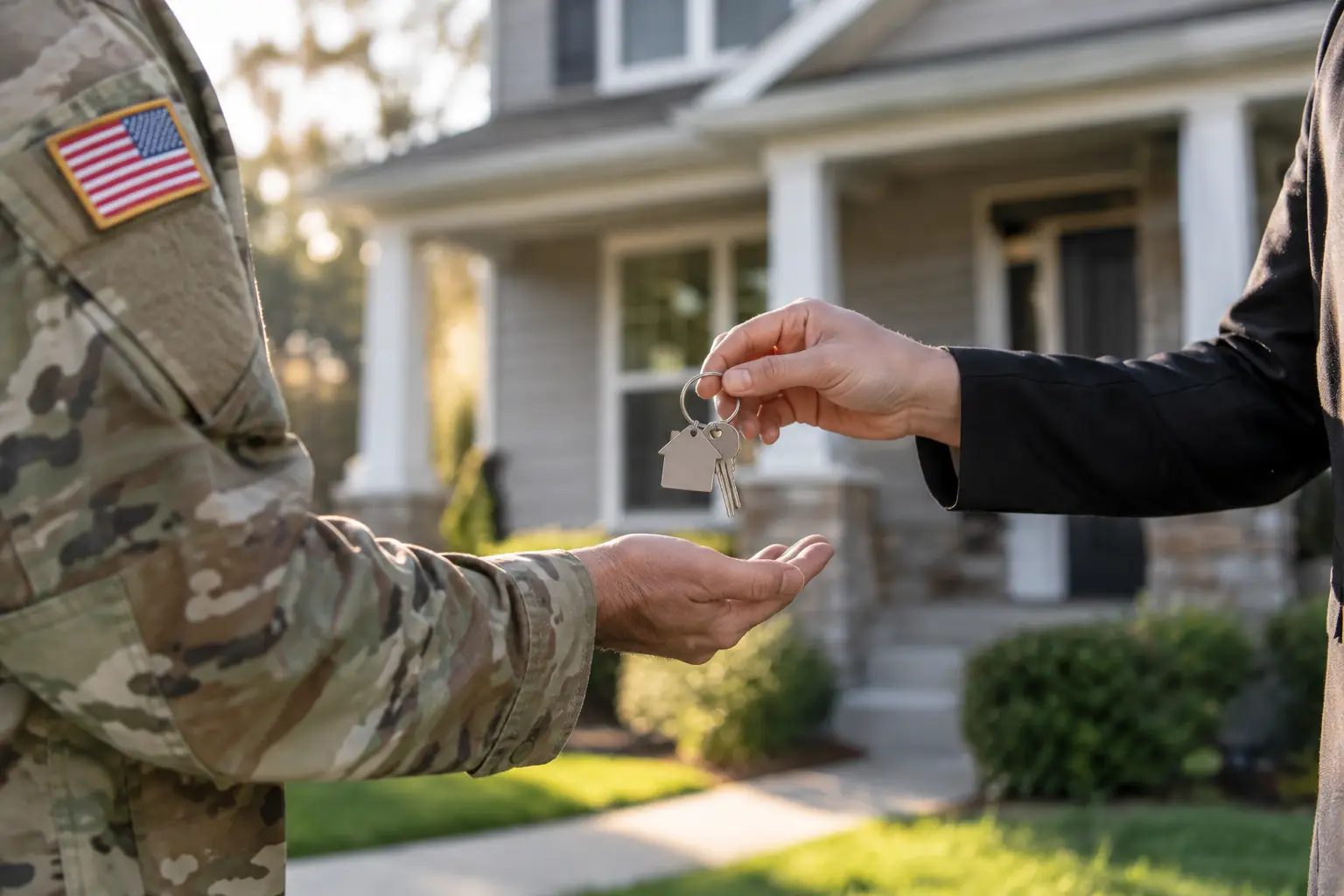
Your VA home loan benefit can help you buy without a down payment in many situations and without monthly mortgage insurance. But a useful benefit is not the same thing as a complete buying plan.
The decisions around the loan matter just as much as the loan itself. What happens to your entitlement if you keep your current house? Should you finance the funding fee? Will the property meet VA requirements? And what makes a seller comfortable accepting your offer?
Getting those answers early helps you shop with a realistic budget and write an offer you understand.
Start With Entitlement, Not a Shopping Limit
VA entitlement is the amount of guaranty available to support your loan. It is not cash you receive, and it is not the amount a lender has approved you to borrow.
Your Certificate of Eligibility, commonly called a COE, helps establish your eligibility and shows information about your entitlement. A lender still needs to review income, credit, debts, and the proposed payment.
VA underwriting also considers residual income, the money left after certain major expenses. That matters for military families because a payment can look manageable on paper while leaving too little room for everyday life.
Full Entitlement and Remaining Entitlement Work Differently
With full entitlement, VA does not impose a county-based loan limit that determines whether a down payment is required. That does not mean unlimited borrowing. Your lender still has qualification requirements, and the home's value must support the financing.
If entitlement is tied to another VA loan, you may still have enough remaining to buy again. In that situation, county loan limits affect the calculation, and a down payment may be needed.
Ask for an entitlement calculation before choosing a price range. A COE alone does not tell you what your next purchase will require in cash.
Reusing the Benefit Requires a Look at the Old Loan
The VA benefit is not limited to one purchase. Reusing it, however, depends partly on what happened to your earlier VA loan and the property it financed.
- You sold the property and paid off the VA loan. You can generally request restoration of the entitlement used for that loan.
- You kept the property and still have its VA loan. You may be able to use remaining entitlement for another qualifying primary residence.
- You paid off the VA loan but kept the property. A one-time restoration option may be available, subject to VA requirements.
Paying off a loan does not mean you should assume your entitlement record is ready for the next purchase. Have the lender verify the status and identify any restoration documents needed.
If someone assumes your existing VA loan, your entitlement may remain attached to it. Release from liability and restoration of entitlement are separate issues. Ask the servicer how both will be handled before agreeing to an assumption.
A Military Move Adds Another Layer
Keeping your previous home as a rental may sound appealing when you receive new orders. But you still need to qualify for the next purchase, and projected rent is not automatically counted dollar for dollar.
Discuss the existing payment, rental documentation, cash reserves, and your occupancy plans. VA purchase financing is intended for a primary residence, not a vacation home or a property purchased solely as an investment.
Deployment and other service circumstances can affect how occupancy requirements are satisfied, including qualifying spouse occupancy. Get your specific plan reviewed rather than relying on a general rule from another family's experience.
Separate the Funding Fee From Other Closing Costs
The VA funding fee helps support the program. Whether you owe it, and how much it is, depends on factors such as loan type, down payment, prior use of the benefit, and exemption status.
Some borrowers are exempt, including many veterans receiving VA compensation for service-connected disabilities. Other qualifying categories include certain surviving spouses and active-duty service members who provide evidence of a Purple Heart. Have your lender verify your status.
If you have a pending disability claim, flag it early. A later award can support a funding-fee refund in certain circumstances, depending on its effective date. Do not budget around an assumed exemption or refund.
Pay It Now or Add It to the Loan?
For a VA purchase, the funding fee can generally be financed. That preserves cash but increases the loan balance and the interest paid if you carry that balance over time.
Paying it upfront avoids borrowing that amount, but uses money you may need for moving, repairs, or an emergency reserve. Neither choice is automatically best.
Ask for side-by-side estimates showing the payment, loan amount, and cash to close. Remember that no down payment does not mean no closing costs. Taxes, insurance, title charges, and other expenses still need a plan. Financing the funding fee does not make every purchase closing cost financeable.
The Appraisal Has Two Jobs, Neither Is a Home Inspection
A VA appraisal evaluates market value and whether the property meets VA minimum property requirements. Those requirements focus on issues such as safety, sanitation, and structural soundness.
The appraisal is not a detailed inspection of every system. A separate home inspection can help you understand maintenance needs and defects that may not be identified during the appraisal.
For an older home in Modesto or elsewhere in the Central Valley, visible roof problems, unsafe wiring, or other condition concerns deserve attention before you commit money to the transaction.
Plan for Repairs or a Value Gap
If the appraisal identifies required repairs, the parties must determine who will handle them and when. Do not assume repairs can wait until after closing. Any permitted exception needs lender approval and must meet applicable requirements.
If the appraised value is below the contract price, options may include renegotiating, requesting a reconsideration of value supported by relevant evidence, or bringing additional cash. A reconsideration is not a promise of a higher value.
The VA escape clause protects the buyer from being compelled to complete the purchase or forfeit earnest money solely because the price exceeds VA's established reasonable value. Review its operation with your agent and lender, including how it interacts with your contract.
Give the Seller a Clear, Credible Offer
A seller usually wants confidence that the buyer can close, a workable timeline, and a clear picture of the seller's net proceeds. VA financing alone does not answer those questions.
A strong offer can include a lender-reviewed preapproval, realistic deadlines, and clearly stated requests for seller-paid costs. Ask your lender what the preapproval covers and what remains subject to review.
Seller-paid buyer closing costs and VA-defined seller concessions are not interchangeable categories. Have your lender and agent structure any request correctly rather than assuming all seller assistance falls under one cap.
You do not need to hide that you are using your earned benefit. You need a team that can explain it accurately. No down payment does not prove a buyer lacks savings, and a VA appraisal does not automatically make a property harder to sell.
Build Your Plan Before Writing the Contract
- Get your COE and confirm available entitlement.
- Review prior VA loans, occupancy plans, and any upcoming military move.
- Verify funding-fee status and compare cash-to-close options.
- Set a payment target that leaves room for household needs and reserves.
- Coordinate property condition, offer terms, and timing with your lender and agent.
Your next step is to gather your COE, current mortgage information, and a comfortable monthly housing budget. Reach out to Ed Parcaut, a U.S. Navy veteran and Modesto mortgage professional, NMLS 235384, to work through the details and build a VA purchase plan around your family's needs.