You May Not Need 20% Down
Saving for your first home can feel like a big job, especially when you believe the down payment has to be 20% of the purchase price. Before you build your entire plan around that number, it helps to separate a common misconception from an actual loan requirement.
Unless your loan type or lender requires it, putting 20% down is typically not necessary. That means your savings goal may be different from what you first imagined. You could be closer to buying a home than you realize.
The question is not simply, “Have I saved 20%?” A more useful question is, “What down payment would the loan options available to me actually require?” Start there before deciding that homeownership is out of reach.
Why the 20% Belief Deserves a Second Look
A 20% down payment can make sense when it is affordable. But something that can be a good choice is not automatically a requirement for everyone.
As The Mortgage Reports explains:
“Although putting down 20% to avoid mortgage insurance is wise if affordable, it’s a myth that this is always necessary. In fact, most people opt for a much lower down payment.”
That distinction matters. You do not have to dismiss the idea of putting 20% down. You simply do not need to assume it is your only path without reviewing your loan options first.
Put Down Payment Statistics in Context
The National Association of Realtors reporting cited in the original article placed the median down payment at 15% for all homebuyers and 8% for first-time buyers. It also reported that the median had not exceeded 20% over the historical period discussed.
Those figures describe the reporting used in the original article, not a permanent market benchmark or a requirement for your purchase. The practical takeaway remains the same: buyers do not all put 20% down.
Use those numbers to challenge the misconception, not to choose your own down payment. Your next step is to learn what your loan type and lender would require, rather than assuming another buyer’s down payment should be your target.
Explore Loan Options With Lower Down Payments
Before you decide how much more you need to save, ask a loan officer or mortgage broker to explain the options that may apply to you.
The original article highlights three possibilities:
- FHA loans: Down payments can be as low as 3.5%.
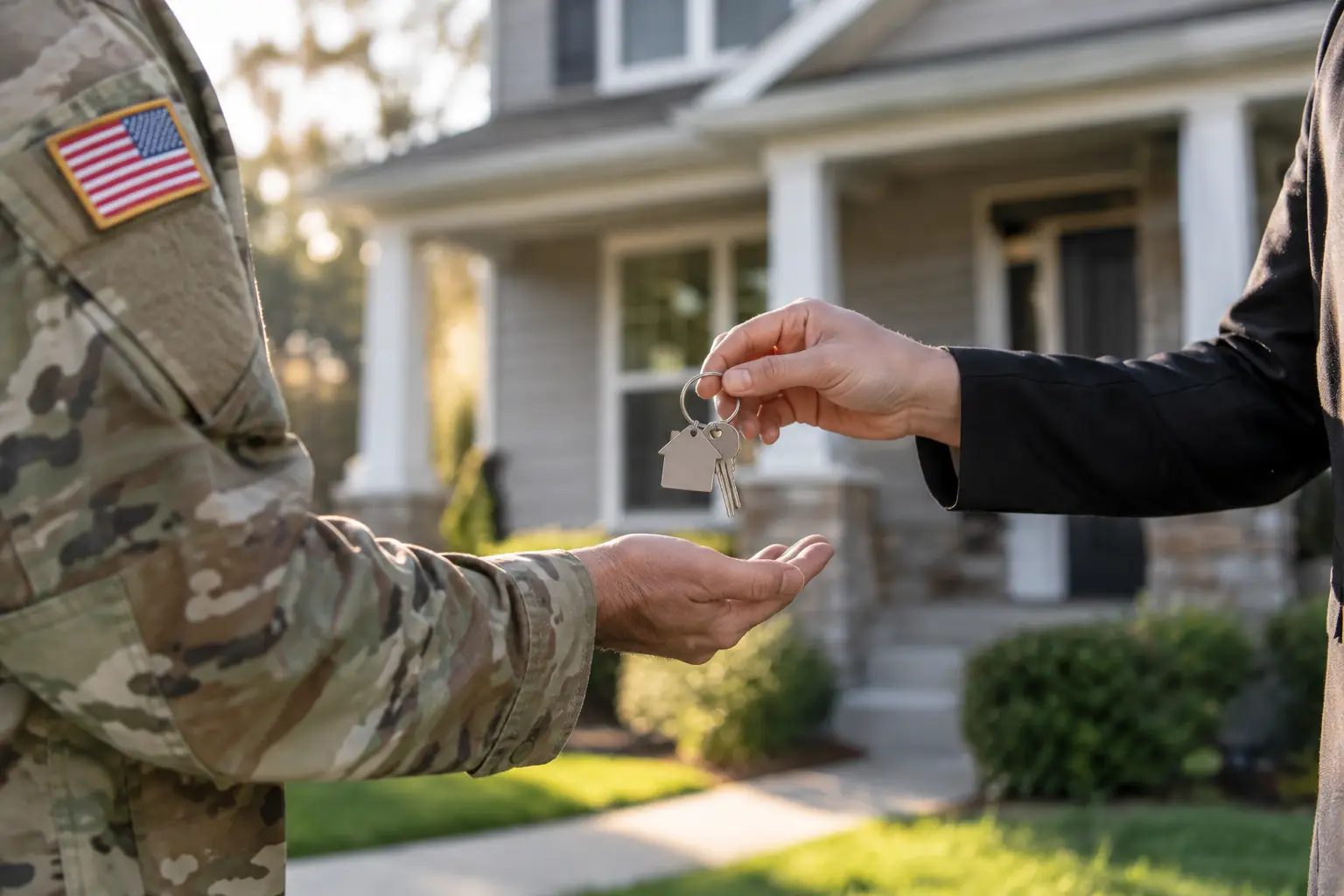
- VA loans: Qualified applicants can purchase without a down payment requirement.
- USDA loans: Qualified applicants can also purchase without a down payment requirement.
The words “qualified applicants” matter. These options are worth discussing, but a low or no down payment requirement is not a promise that you will qualify.
If you are a veteran exploring VA benefits, ask specifically about the VA option. If you are considering FHA or USDA financing, ask whether either belongs in your homebuying conversation. The goal is to replace assumptions with information about your situation.
Ask About Down Payment Assistance
Loan options are only part of the conversation. According to Down Payment Resource, the original article identified more than 2,000 homebuyer assistance programs in the United States, many intended to help with down payments.
That is a reason to ask questions, not to assume assistance is guaranteed. You do not need to sort through every program yourself before speaking with someone who can help you explore the possibilities.
A loan officer or broker can be a resource for learning about local grants and loan programs that may help. Ask which programs are worth reviewing for your circumstances and what you would need to do to find out whether you qualify.
Bring a Short List of Questions
Keep the conversation focused on what you need to understand before setting a savings target:
- Does the loan type or lender I am considering require 20% down?
- What lower-down-payment options should we review?
- Could FHA, VA, or USDA financing apply to my situation?
- Are there local grants or down payment assistance programs worth exploring?
- What information do you need to help me evaluate these options?
You do not need every answer before reaching out. Getting those answers is the purpose of the conversation.
Consider the Trade-Off of Waiting
Saving more may be part of your plan. The important thing is to make that decision deliberately, rather than waiting only because you believe 20% is mandatory.
U.S. Bank points out one potential trade-off:
“For some, waiting to save up 20% for a down payment may ‘cost’ too much time. While you’re saving for your down payment and paying rent, the price of your future home may go up.”
The key word is may. If home prices rise while you are saving, the home you hope to buy could cost more later.
The original article also cited an expectation that home prices would appreciate over a five-year forecast period. That was a forecast tied to the original discussion, not an evergreen promise about what prices will do.
The underlying point is conditional: if you buy and your home later increases in value, that growth can help build equity. If you wait and the home you want becomes more expensive, that increase can add to its purchase price.
Neither point is a reason to rush. They are reasons to compare your options instead of letting the 20% misconception make the decision for you.
Build Your Plan Around Your Actual Options
You do not always need a 20% down payment to buy a home. Lower-down-payment loans and assistance programs may offer options worth exploring, and a professional conversation can help you understand which ones deserve a closer look.
Start by writing down what you have saved, what you thought you needed, and the questions you want answered. Then reach out to Ed Parcaut, NMLS 235384, to discuss your homebuying goals and explore a practical next step.