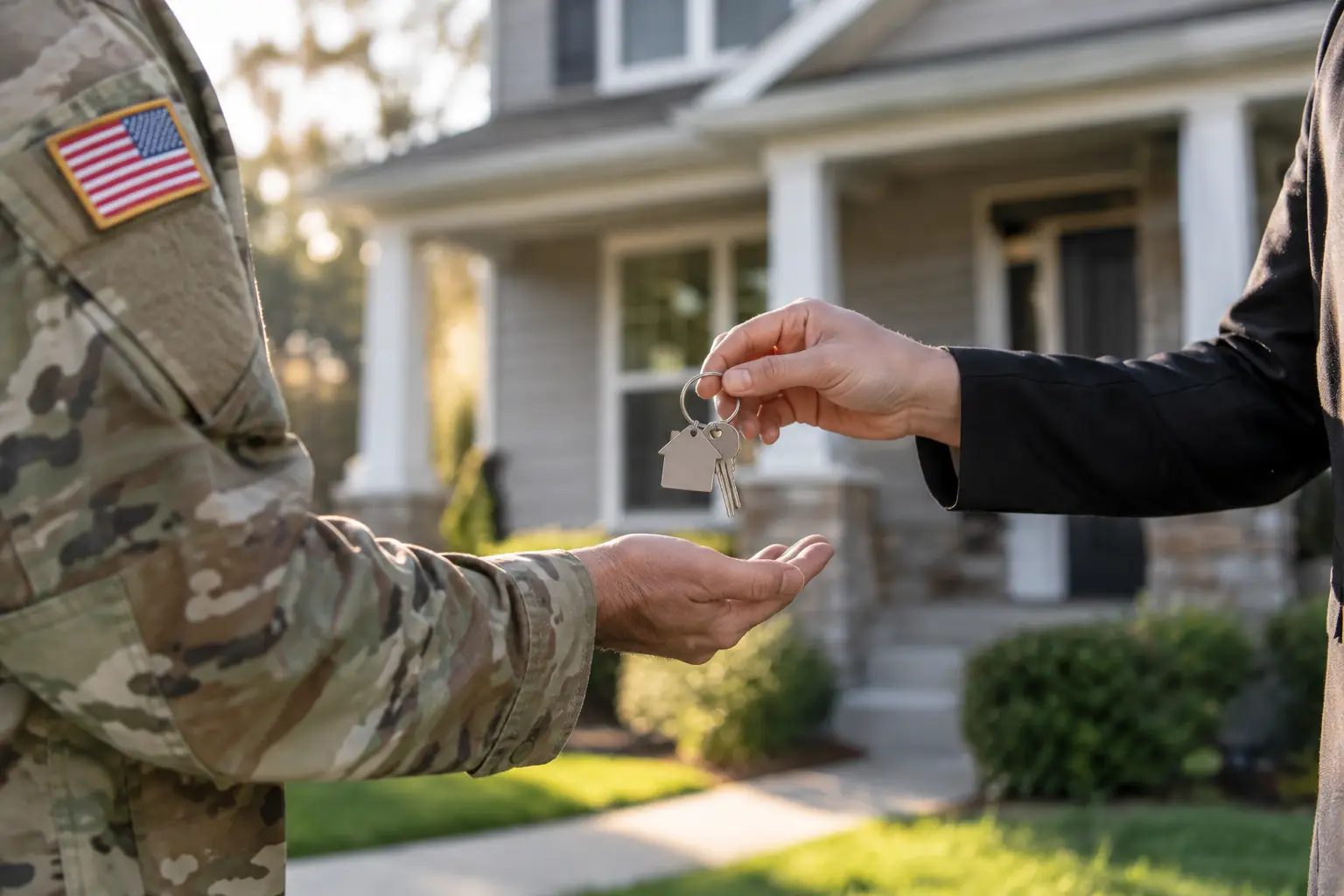
For many veterans, a VA loan is one of the most valuable benefits earned through military service. Yet misinformation keeps many from buying a home or even applying. Some assume they need perfect credit. Others believe they can use the benefit only once.
The VA loan program has helped millions of veterans become homeowners, often with fewer barriers than conventional financing. Understanding the facts can help you decide whether this benefit fits your goals.
What Is a VA Loan?
A VA loan is a mortgage backed by the U.S. Department of Veterans Affairs. The program helps eligible veterans, active-duty service members, and certain surviving spouses become homeowners.
Its benefits can make buying a home more accessible:
- No down payment in many cases
- Competitive interest rates
- No private mortgage insurance, or PMI
- Flexible credit guidelines
- Limited closing costs
Those advantages are worth exploring before letting a common misconception rule out your options.
10 VA Loan Myths, Explained
1. You Need a 20% Down Payment
Many people assume every mortgage requires a substantial down payment. While some conventional loans may benefit from a larger down payment, VA loans often let eligible borrowers buy with no down payment.
For veterans with income to support a mortgage but limited savings, that can significantly shorten the path to homeownership. Rather than spending years saving tens of thousands of dollars, many can buy sooner and begin building equity. You may still choose to put money down, but it is often not required.
2. VA Loans Are Only for First-Time Buyers
Using your VA benefit once does not necessarily mean it is gone forever. VA loan benefits can often be used multiple times.
Depending on your circumstances, you may be able to sell your current home and restore your entitlement, purchase another primary residence, or use remaining entitlement for an additional purchase. Review your situation with a knowledgeable mortgage professional rather than assuming a previous VA loan ends your eligibility.
3. You Need Perfect Credit
Credit matters, but VA loans often offer more flexibility than borrowers expect. There is no single government-mandated minimum credit score that applies to every lender. Individual lenders set their own requirements.
Lenders often look at your full financial profile, including:
- Income stability and employment history
- Debt-to-income ratio
- Payment history
- Available reserves
Less-than-perfect credit does not automatically disqualify you from homeownership. If your credit needs work, a mortgage professional can often help identify steps to strengthen your profile before applying.
4. VA Loans Take Too Long to Close
Concerns about excessive delays may have had some validity in the past, but lending processes have changed. Many VA loans close on timelines similar to conventional mortgages.
The actual timeline often depends on documentation readiness, appraisal scheduling, underwriting requirements, and buyer responsiveness. Preparing documents early and working with experienced professionals can help you move through the process efficiently.
5. Sellers Will Not Accept VA Offers
Some veterans worry that sellers automatically reject VA financing. That concern occasionally comes up in competitive markets, but it is often overstated.
Most sellers focus on the purchase price, financing strength, closing timeline, and buyer qualifications. A strong pre-approval and well-structured offer can make a VA-financed buyer just as competitive as other buyers.
In many cases, sellers care more about the likelihood of a successful closing than the loan type.
6. VA Loans Have Higher Interest Rates
Government backing does not automatically mean a higher interest rate. VA loans often offer highly competitive rates.
Backing from the Department of Veterans Affairs may reduce lender risk, which can translate into attractive financing terms for eligible borrowers. Rates still vary with market conditions, your credit profile, the loan structure, and lender guidelines.
Comparing loan options is wise. Veterans are often pleasantly surprised by the rates available through VA financing.
7. You Can Only Buy a Small Starter Home
VA loans are not limited to modest starter homes. They can finance a wide range of primary residences, subject to program and lender guidelines:
- Single-family homes
- Certain condominiums
- Townhomes
- Multi-unit properties when occupancy requirements are met
The property's size and value depend primarily on your financial qualifications and lender requirements, not arbitrary restrictions tying VA financing to small homes.
8. The Process Is Too Complicated
Every mortgage involves paperwork, but lending technology has simplified much of the process. Most borrowers need income documentation, asset documentation, a credit review, and a Certificate of Eligibility, or COE.
An experienced mortgage team can explain the requirements and guide you through each step. The process may be unfamiliar, but it does not have to be intimidating.
9. You Must Be Currently Serving
VA loans are not only for active-duty personnel. Many veterans remain eligible long after leaving military service.
Eligibility depends on factors including length of service, type of service, and discharge status. Certain National Guard and Reserve members may qualify, and some surviving spouses may also be eligible. If you are unsure, check rather than assuming you do not qualify.
10. Renting Is Always Safer Than Buying
Renting can make sense in certain situations. But waiting is not automatically the safer financial choice, and long-term renters often miss opportunities to build equity and wealth through homeownership.
A portion of each mortgage payment may contribute toward your ownership interest. Over time, homeowners may benefit from equity growth, property appreciation, greater housing stability, and long-term wealth accumulation.
Those benefits are possibilities, not promised outcomes. Every financial situation is different, but many veterans find that owning aligns with their long-term goals more effectively than continuing to rent.
Why Veterans Miss Out on Their Benefits
One of the biggest obstacles is misinformation, not qualification. Veterans may never explore their options because they assume they will not qualify, need more savings, or have insufficient credit. Others misunderstand eligibility or do not realize benefits can be reused.
Those assumptions can delay homeownership for years. A conversation with a mortgage professional who understands VA financing is the best way to determine what may be possible.
How to Prepare for a VA Loan
You do not have to solve every question before starting. Begin with these practical steps:
- Review your credit. Know where you stand and identify areas for improvement.
- Organize your documents. Gather tax returns, pay stubs, bank statements, and military service documentation.
- Set a comfortable budget. Focus on what you can comfortably afford, not just the amount you may qualify for.
- Verify eligibility. Confirm your Certificate of Eligibility and review your available benefits.
- Discuss pre-approval. A conversation with a mortgage professional can provide insight and identify issues before you start house hunting.
Check the Facts Before Ruling Yourself Out
The VA loan program remains a powerful homeownership tool for veterans. Flexible qualification standards, competitive financing, and little or no down payment can make it worth a closer look.
You earned this benefit through your service. Understanding it could be a first step toward your homeownership goals and long-term financial security for your family.
Start by gathering your financial and service documents and writing down your questions. Then reach out to Ed Parcaut, a Modesto mortgage professional and U.S. Navy veteran, to discuss your eligibility, budget, and next steps. NMLS 235384.